Incense smoke: risks, research facts and 7 ways to use it more safely
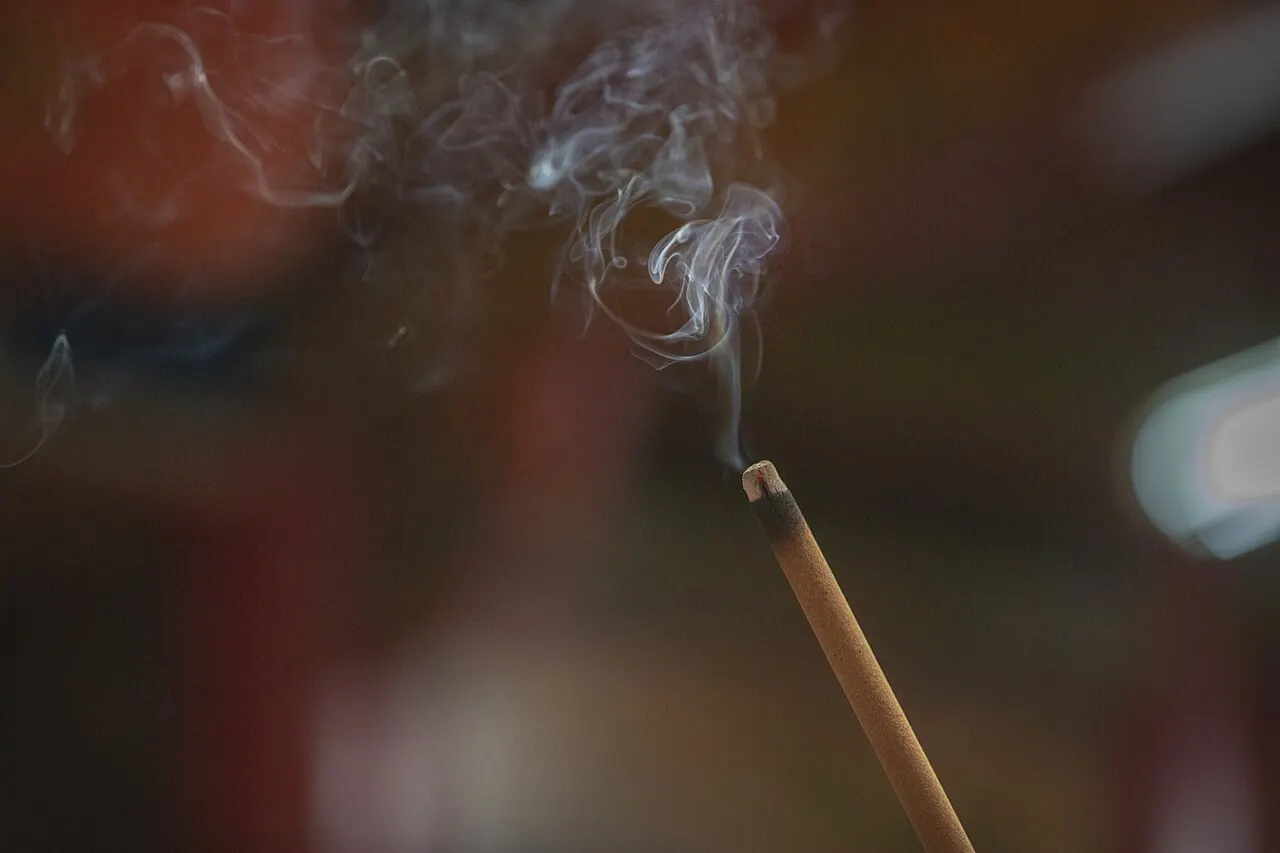
Incense smoke pollutes indoor air and can irritate your airways, especially in closed rooms and for sensitive people. How large the long-term risk is remains debated, so the best approach is to use it sparingly and with good ventilation.
The short answer: is incense smoke harmful?
For most people, the risk depends on three things: how often you burn it, how long you burn it, and how well the room is ventilated. Occasional use in an open space is very different from daily burning in a closed bedroom.
This table sums up where the evidence stands today. We've deliberately separated what's fairly clear from what's still uncertain.
| Question | State of the evidence | What it means for you |
|---|---|---|
| Does incense pollute indoor air? | Fairly clear | Ventilate every time you use it |
| Does the smoke irritate the airways? | Fairly clear at high exposure | Stop if you cough or your eyes sting |
| Does incense trigger asthma? | Studies conflict | People with asthma should avoid it |
| Does incense cause cancer? | Still debated | Limit routine exposure |
What's in incense smoke?
A scientific review by Lin and colleagues (2008) lists several groups of substances from burning incense. The list varies between products, but the pattern is similar:
- Particles: very fine dust from incomplete burning.
- Gases: carbon monoxide, carbon dioxide, nitrogen dioxide and sulfur dioxide.
- Volatile organic compounds: including benzene, toluene and xylenes.
- Aldehydes: a group of compounds that can irritate the eyes and airways.
- Polycyclic aromatic hydrocarbons: compounds that also appear when other organic materials burn.
The same review also says stick incense produces more than 45 mg of particles per gram burned. Cigarettes produce about 10 mg per gram. However, this doesn't mean one incense stick is worse than one cigarette, because the way people breathe it in and the amount of exposure are very different.
Why fine particles are the main concern
In incense smoke, particle size largely decides how far particles travel in the body. According to Lin and colleagues, particles under 10 micrometers can build up in the airways, while those under 2.5 micrometers can reach the alveoli, the deepest air sacs of the lung.
The World Health Organization also states there is strong evidence that particles harm health, including through heart disease, respiratory disease and cancer. That statement covers outdoor air pollution in general, not incense in particular. So we can't simply treat the two as the same.
Even so, the mechanism is worth taking seriously. Incense is one source of fine particles indoors, and a closed room holds those particles for longer.
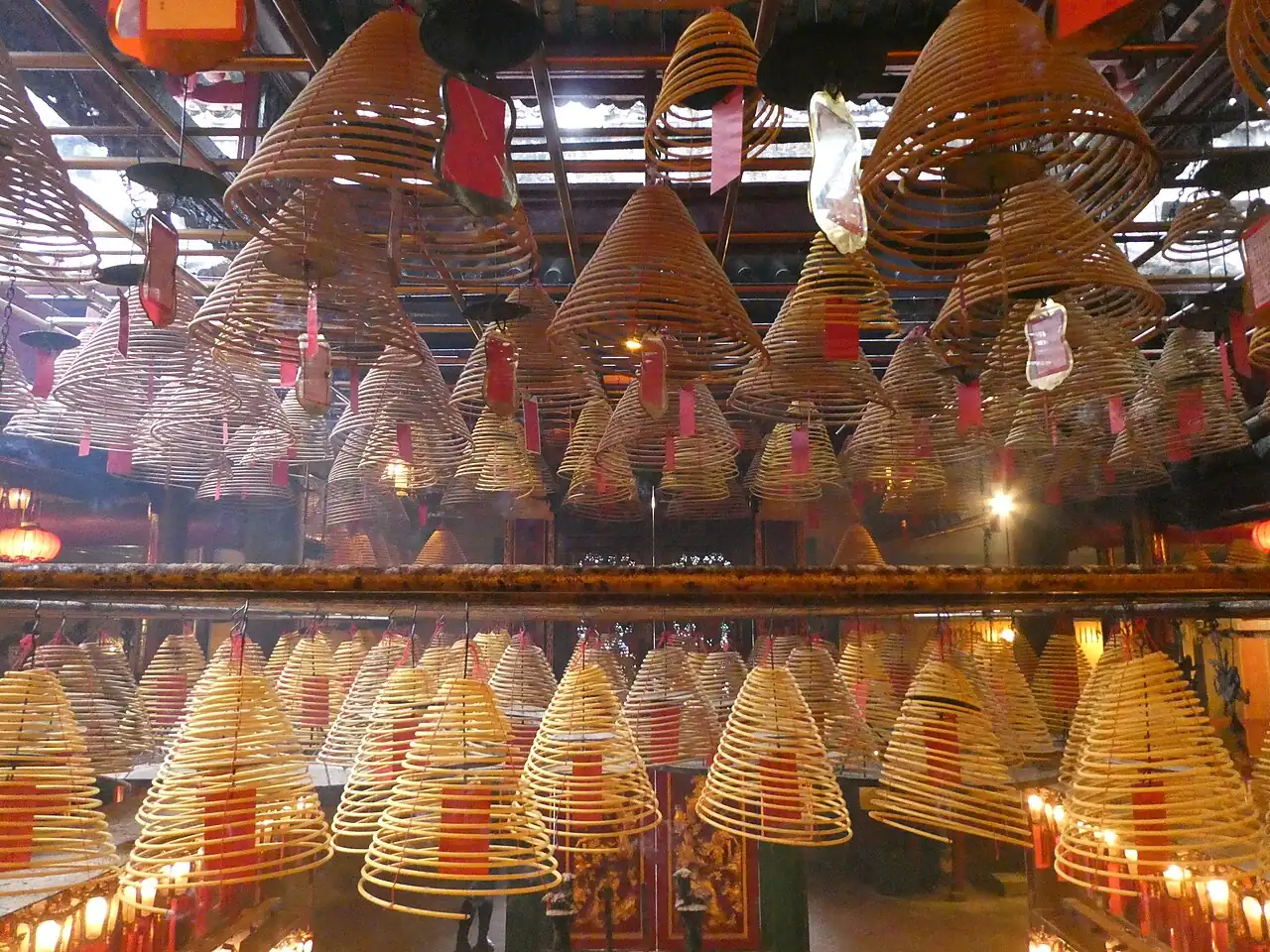
What does research say about incense smoke?
Existing studies don't paint a uniform picture. Here are findings summarized by Lin and colleagues, along with their limits:
| Study | Finding | Note |
|---|---|---|
| 4,164 schoolchildren in Taiwan | Incense and mosquito coils linked with cough | Mixed exposure |
| Temple workers | More nose and throat irritation and chronic cough | Far higher exposure than a home |
| 35,036 children in Taiwan | Home incense negatively linked with asthma | Authors suspect a confounding factor |
| Hong Kong study | No link with respiratory symptoms | One location |
| 334 mother-infant pairs | Incense linked with higher cord blood IgE | Needs further research |
| A temple in Taiwan | Particles at 1,316 µg/m³ inside, 73 µg/m³ outside | Not typical of a home |
In the end, the authors conclude that incense pollutes the air and may contribute to airway disease. They also stress how hard it is to separate the effects of each component. For that reason, they call for better controlled and longer studies.
Incense smoke and cancer risk
People often ask about incense smoke and cancer, but the answer isn't settled. Lin and colleagues note some findings that point towards risk, such as incense particle extracts that were mutagenic in a laboratory test. Some studies also linked parental exposure with childhood leukemia.
On the other hand, other studies found no link with lung cancer or brain tumors. One study even found lower risk among smokers, possibly because of diet. As a result, the authors describe the link with cancer as still debated.
So don't assume incense smoke definitely causes cancer, and don't assume it's definitely safe either. The sensible position is to limit exposure, especially daily exposure in a closed room.
Who should avoid incense smoke?
Some people have stronger reasons to stay away from incense smoke. Halodoc advises these groups to avoid it:
- Infants and children.
- People with asthma.
- People with breathing disorders or a history of smoke allergies.
- Anyone who is sensitive to airborne irritants.
Beyond those groups, pregnant people, older adults and people with heart disease should ask a doctor first. That advice comes from our own caution, because research on those groups is limited.
Pets deserve attention too. Birds and small animals share the same room and can't choose to leave, so give them a way out or don't burn incense near them.
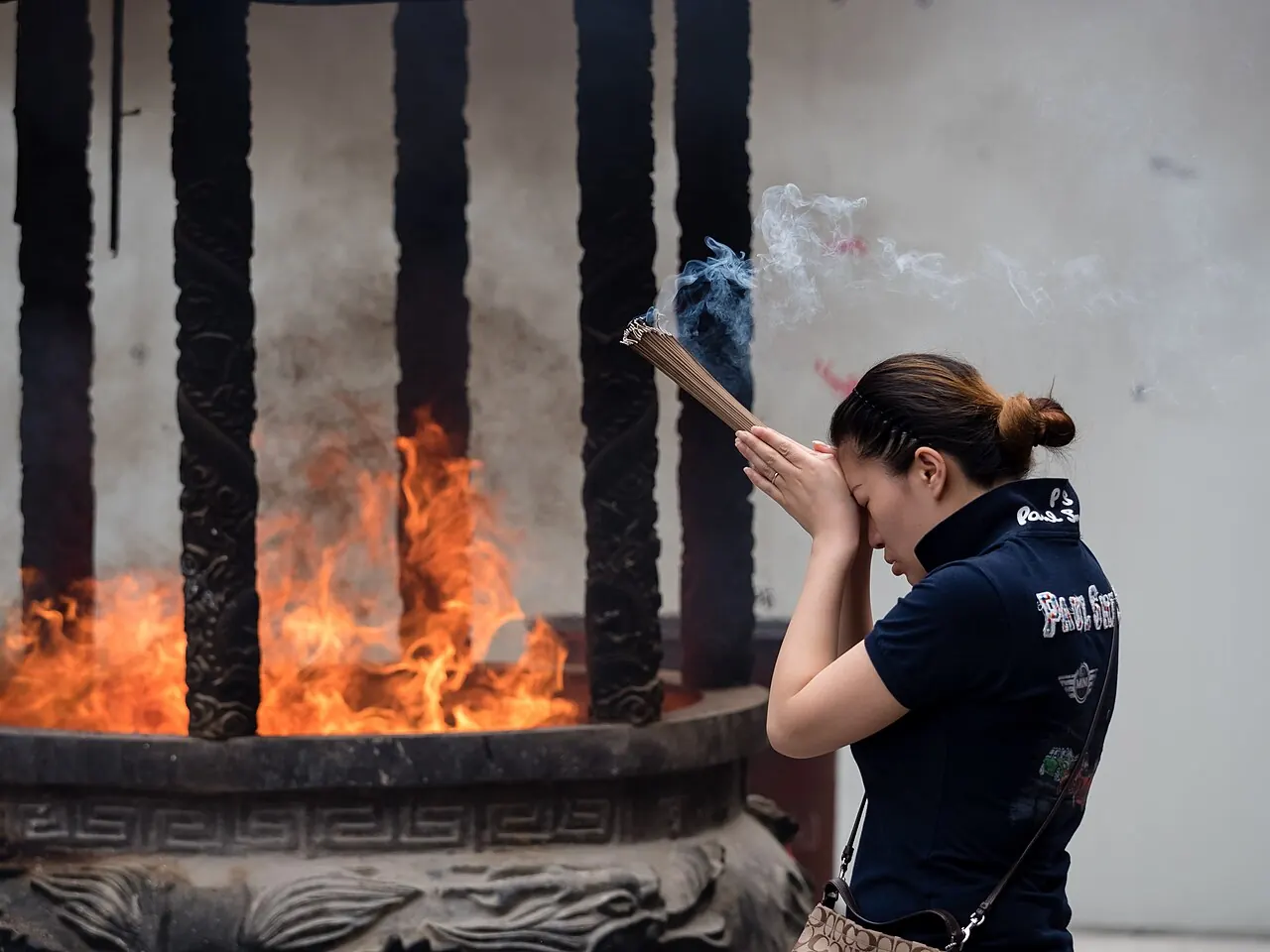
Symptoms to watch for
Your body usually signals when exposure to incense smoke is too high. According to Halodoc, you should stop if you notice these symptoms after breathing smoke:
- A cough that won't settle.
- Shortness of breath.
- Stinging or watering eyes.
- An itchy or irritated throat.
Put out the incense and open a window straight away. Then move somewhere with fresh air. If symptoms don't improve, or if you have severe breathlessness or chest pain, get medical help right away.
Seven ways to reduce incense smoke exposure
You don't have to give up incense completely to reduce exposure to incense smoke. These simple habits help a lot:
- Open a window or door. Lin and colleagues specifically advise good ventilation, because it dilutes pollutants.
- Limit the time. Halodoc suggests about 15 to 30 minutes per session.
- Don't burn it while you sleep. Beyond the overnight exposure, an unwatched ember is a fire risk.
- Use less. Try half a stick, or choose low-smoke incense.
- Use a heatproof holder. Place it on a stable surface, away from fabric and paper.
- Put embers out properly. Make sure they're out before you leave the room.
- Take breaks. Avoid burning incense every day in the same room without fresh air.
If you work or worship somewhere with thick smoke, reduce your time there when you can. The review by Lin and colleagues gives the same advice.
Is natural incense safer?
Not necessarily, because natural incense smoke is still smoke. A natural or aromatherapy label describes where the materials come from, not what happens when they burn. Wood, resin and plants still produce smoke and particles.
In fact, incense smoke from traditional forms can be thicker. Resin on charcoal, for example, often produces thick smoke. So look at how it burns, not only at the label. Our guide to types of incense explains the differences between forms.
Be careful with health claims on packaging as well. Claims that incense cures illness or kills viruses need research you can check. Without that evidence, treat incense as a fragrance and a cultural practice.
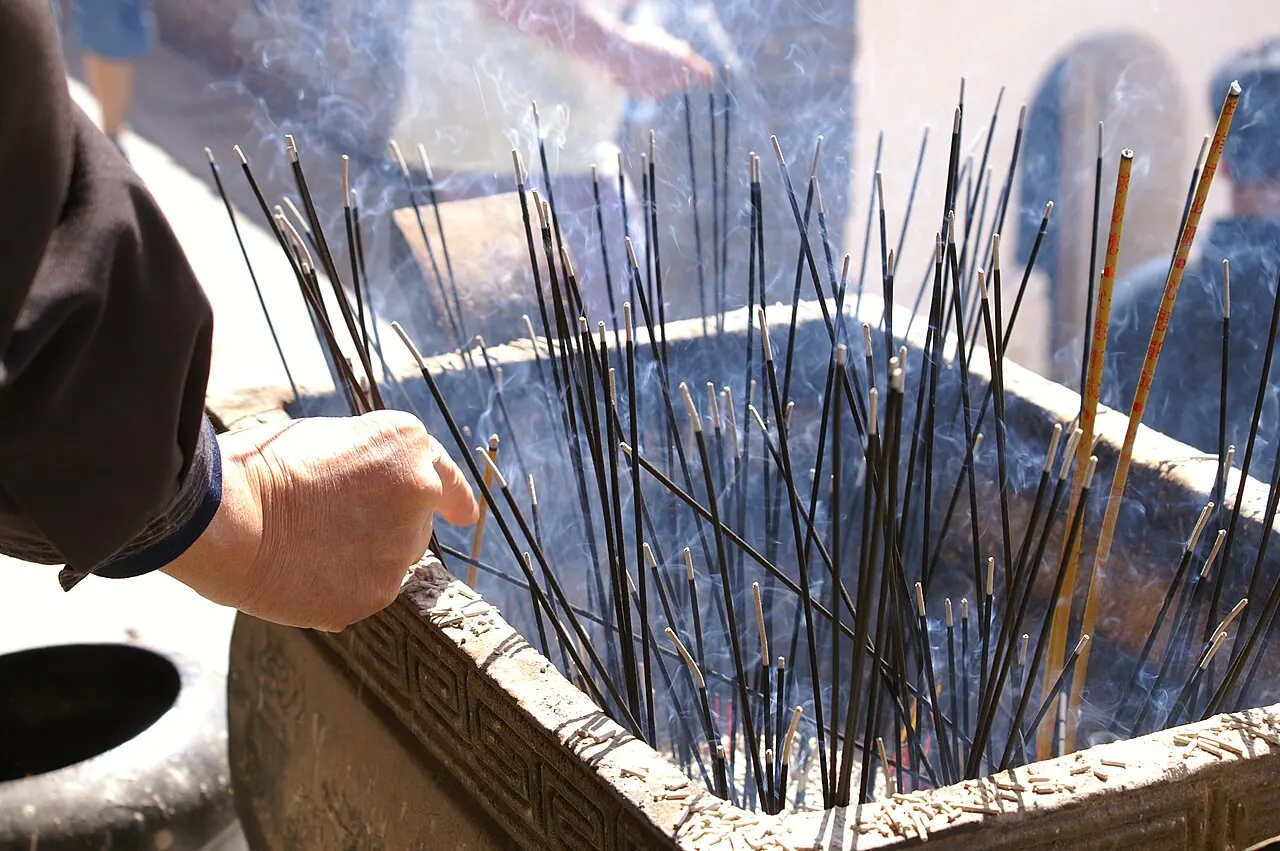
Comparing smoke from different forms
Incense smoke levels vary with the form and how you use it. This table is our general estimate rather than a measurement.
| Form | Typical smoke | Advice |
|---|---|---|
| Thin coreless stick | Low | A good first choice for small rooms |
| Bamboo-core stick | Medium to heavy | Use with a window open |
| Cone | Medium to heavy | Scent arrives fast, so use it briefly |
| Resin on charcoal | Heavy | Use in a large, airy space |
| Wood on an electric heater | Low | Less smoke than burning it |
Whichever you choose, the amount you burn still matters. Two thin sticks can produce more smoke than one thick stick, so treat this table as a rough guide only.
Myths and facts
Many beliefs about incense smoke circulate without strong evidence. Here are some of the most common ones:
| Belief | Reality |
|---|---|
| Smoke cleans the air | Incense adds particles and gases to the air |
| Natural incense is harmless | Burning natural materials still creates smoke |
| A gentle scent means little smoke | Scent strength and smoke are two different things |
| An open window removes all risk | Ventilation reduces exposure but doesn't remove it |
| All incense is equally risky | Materials, form and use all change your exposure |
Incense smoke in worship and tradition
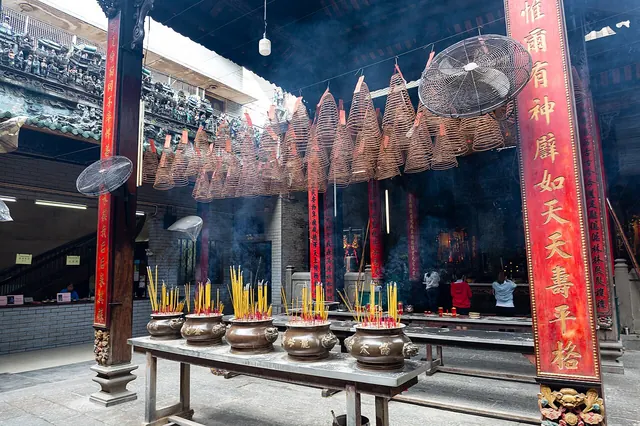
For many people, incense is far more than a room fragrance. Canang sari in Bali, hio in Chinese temples and many other traditions give it deep meaning. So health advice shouldn't sound like a ban on worship.
Often, small adjustments are enough to cut incense smoke. For example, a family can burn fewer sticks, choose a spot with moving air, or place incense on a terrace. Managers of places of worship can also improve ventilation and move burners to open areas.
Some practices involve far more intense exposure. Dukhan, the Sudanese smoke bath, is one of them, and medical experts warn about its risks. So the closer and longer the exposure, the more caution makes sense.
How to reduce smoke at home
To reduce incense smoke, air movement matters most. Open two openings on opposite sides so air can flow, because a single window often isn't enough. A fan pointing out of a window can also help.
If you're curious about your own room, a PM2.5 monitor can give you a rough picture. Home devices aren't as accurate as laboratory equipment, but they're enough to show the rise while incense burns. They also show how long levels take to fall once a window is open.
An air purifier with a HEPA filter can trap particles, although it won't always remove gases. So use it alongside ventilation, not instead of it.
Ways to enjoy scent without incense smoke
If you're sensitive to incense smoke or have small children, you have other options. Each has its own strengths and limits:
- Essential oil diffuser: no burning, although some people are still sensitive to the scent.
- Wood or resin on an electric heater: agarwood and sandalwood can give aroma with less smoke at low heat.
- Passive natural scents: fresh flowers, citrus slices or spice sachets.
- Burning outdoors: a terrace or garden gives light scent with much lower exposure.
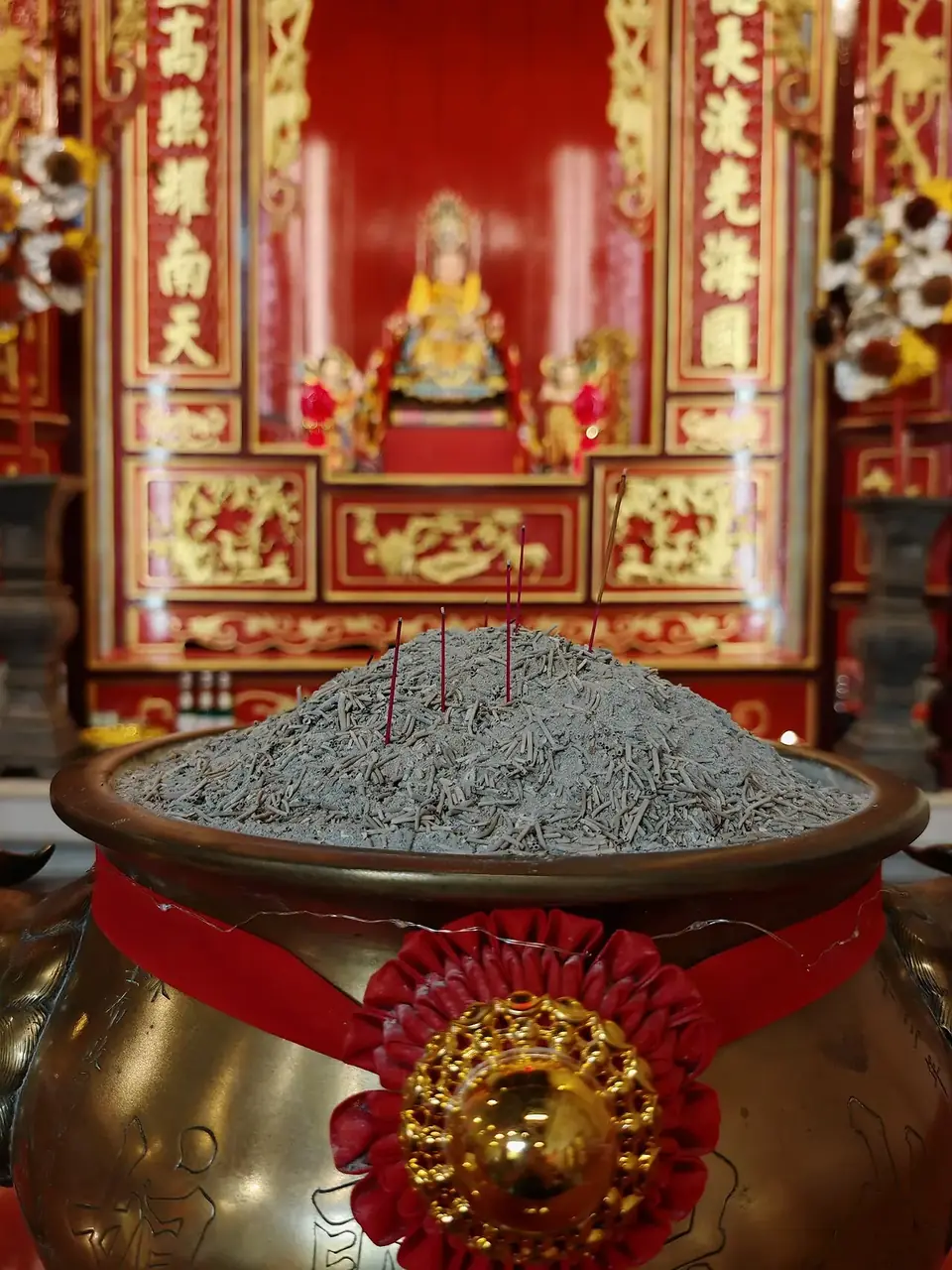
Incense smoke guidance by situation
Safe use of incense smoke depends on the situation. This table gives our general suggestions, so you can adapt them to your own home:
| Situation | Our suggestion | Why |
|---|---|---|
| A baby at home | Avoid incense indoors | Halodoc advises keeping infants away from smoke |
| Someone with asthma | Avoid it, or burn outdoors while they're inside | Smoke can worsen symptoms |
| A small room with no window | Don't burn incense there | Incense smoke lingers longer |
| Daily meditation | Use half a low-smoke stick | Routine exposure should be limited |
| Worship at home | Use a modest amount and open a door | The meaning stays intact |
| A large gathering | Move burning to an open area | Many sticks mean a lot of smoke |
Incense smoke in places of worship
Exposure to incense smoke in places of worship can be far higher than at home. In the review by Lin and colleagues, a temple in Taiwan recorded particles at 1,316 µg/m³ indoors and only 73 µg/m³ outdoors. However, that figure comes from one location, so it doesn't represent every temple.
For managers, a few steps can reduce exposure without changing worship:
- Placing burners in a courtyard or an open-roofed area.
- Providing cross-ventilation and exhaust fans.
- Encouraging worshippers to burn fewer sticks per person.
- Giving staff who work near burners regular breaks.
- Cleaning away ash and dust often.
Staff who work there daily also have the highest exposure. Findings on temple workers, for example, recorded more irritation and chronic cough. For that reason, this group deserves attention first.
Incense smoke, children and pregnancy
Parents ask about incense smoke and this group most often. A survey of 4,164 schoolchildren in Taiwan linked incense and mosquito coils with cough. By contrast, a study of 35,036 children found a negative link with asthma, and its authors suspect another factor was at work.
On pregnancy, one study of 334 mother-infant pairs linked burning incense with higher cord blood IgE. This finding doesn't prove harm to babies, but it's enough to encourage caution. So the safest choice is to reduce exposure during this time.
As a practical step, don't burn incense in a child's bedroom or play area. If your family has a daily worship habit, move incense to an open area and keep children away from hot burners.
How to read claims on incense packaging
Many packs use reassuring words. Unfortunately, those words don't always tell you about real exposure to incense smoke. Here is how to read them:
| Words on the pack | What to ask |
|---|---|
| Natural | What are the binder and fragrance? |
| Aromatherapy | Is there research behind the claimed benefit? |
| Smokeless or low smoke | What size is the stick, and how was it measured? |
| Lab tested | Which laboratory, and what did it test? |
| Kills viruses or cures illness | Where is the scientific evidence? |
If the seller can't answer, treat the claim as marketing. Even so, the product isn't necessarily bad. It simply means the claim hasn't been shown.
What we still don't know about incense smoke
It matters to be honest about the limits of knowledge. So far, a few questions remain open:
- What a safe limit looks like for everyday home use.
- How risk differs between materials and brands.
- Whether long-term, low-level exposure raises cancer risk.
- How much diet and smoking influence the study results.
- How incense smoke from Indonesian products compares, since many studies come from East Asian temples.
Most studies also don't separate one substance from another. As a result, overly confident conclusions, whether frightening or reassuring, often go beyond the evidence.
The limits of this article
Our main evidence comes from one 2008 review and a more recent health summary. Many of the studies looked at temples or mixed exposures, so the results may not match home use. A medical professional hasn't reviewed this article yet.
This article is general information and doesn't replace a doctor's advice. Talk to a healthcare professional if you have a breathing condition, are pregnant, or have lasting symptoms.
Frequently asked questions
Is it bad to breathe incense smoke every day?
Regular use in a poorly ventilated room increases your exposure to particles and irritant gases. The long-term effects are still being studied, so limit use and keep the room ventilated.
Is incense smoke worse than cigarette smoke?
They're hard to compare. One review says stick incense produces more particles per gram, but the way people are exposed and the amounts differ.
How long can I safely burn incense?
There's no established safe limit. Halodoc suggests about 15 to 30 minutes with good ventilation.
Is incense smoke safe around babies and during pregnancy?
Halodoc advises keeping infants and children away from it. If you're pregnant, ask your doctor.
Does incense smoke clean the air?
No. Burning incense adds particles and gases to indoor air.
Can I burn incense in my bedroom?
It's best not to while you sleep. If you use it there, open a window and put it out before bed.