How to burn resin incense: 3 ways, with or without charcoal
Here's how to burn resin incense in the most common way: put a small piece on charcoal with an ash coating, inside a heat-proof burner. Without charcoal, you can use an electric heater or a candle burner. Start with a pea-sized piece, and it's best to use charcoal outdoors.
How to burn resin incense: 3 options
There are three common answers to how to burn resin incense. Most of our sources are shops and hobby writers, and they mainly discuss frankincense rather than Sumatran benzoin. So treat this table as a starting point.
| Method | Heat | What's reported | What to watch for |
|---|---|---|---|
| Charcoal | High, about 300 °C in one study | Quick smoke, and the resin soon goes | Carbon monoxide and hot embers |
| Electric heater | You can adjust it | Subtler scent, and little smoke at low heat | It must stay plugged in |
| Candle burner | Low and hard to control | Little smoke, but it may not be hot enough | Open flame and a hot tray |
Which resin do you have?
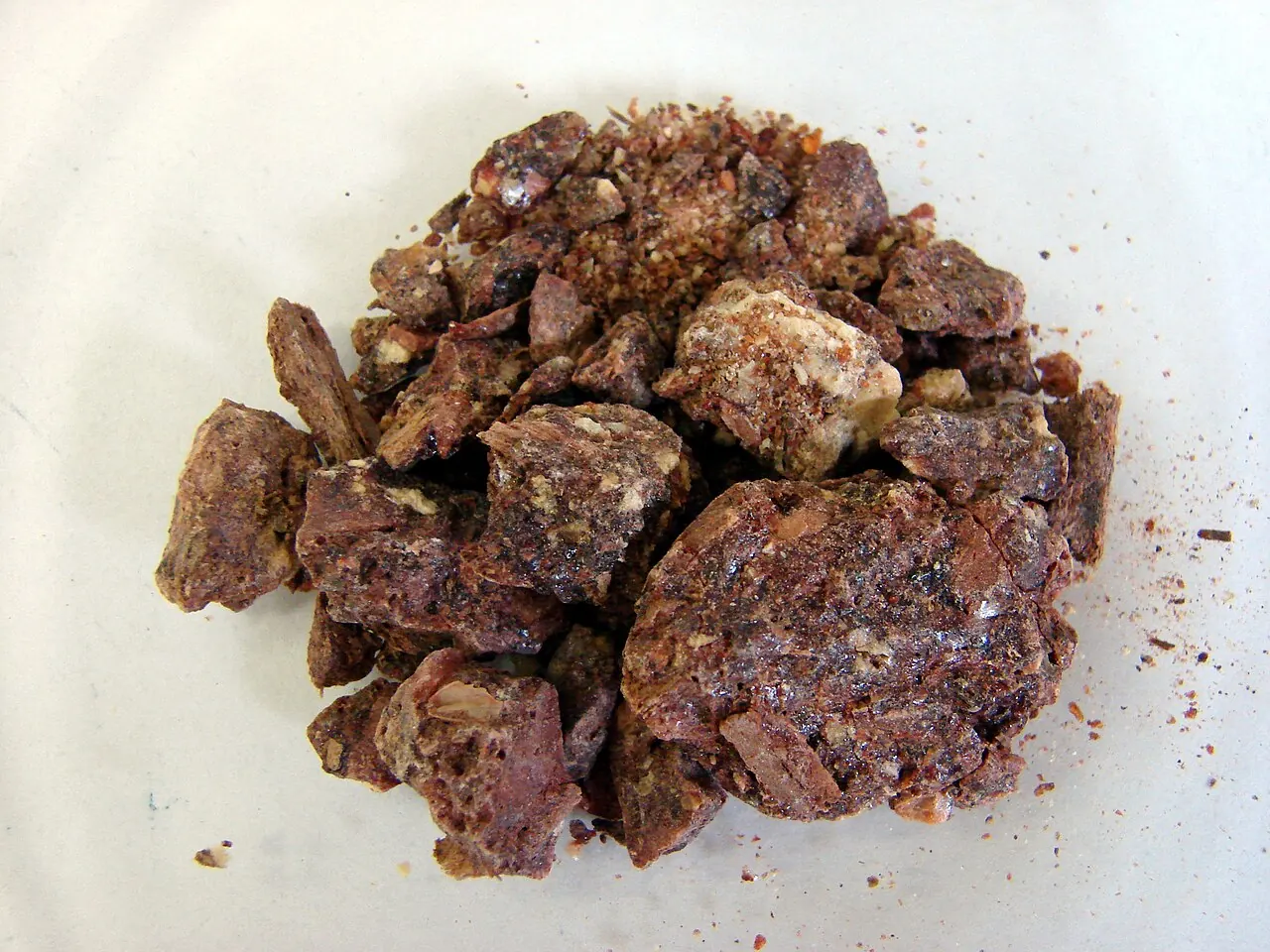
In Indonesia, the word kemenyan usually means Styrax resin, as FAO notes. Prof. Ganis Lukmandaru of Universitas Gadjah Mada describes its scent as honey-like. Meanwhile, frankincense comes from Boswellia trees, so it may behave differently. See our benzoin notes and our Sumatran benzoin profile for details.
People also search for white, black and honey kemenyan. We didn't find a strong source on how burning them differs, so we won't make it up here. Ask your seller, then start with a small amount.
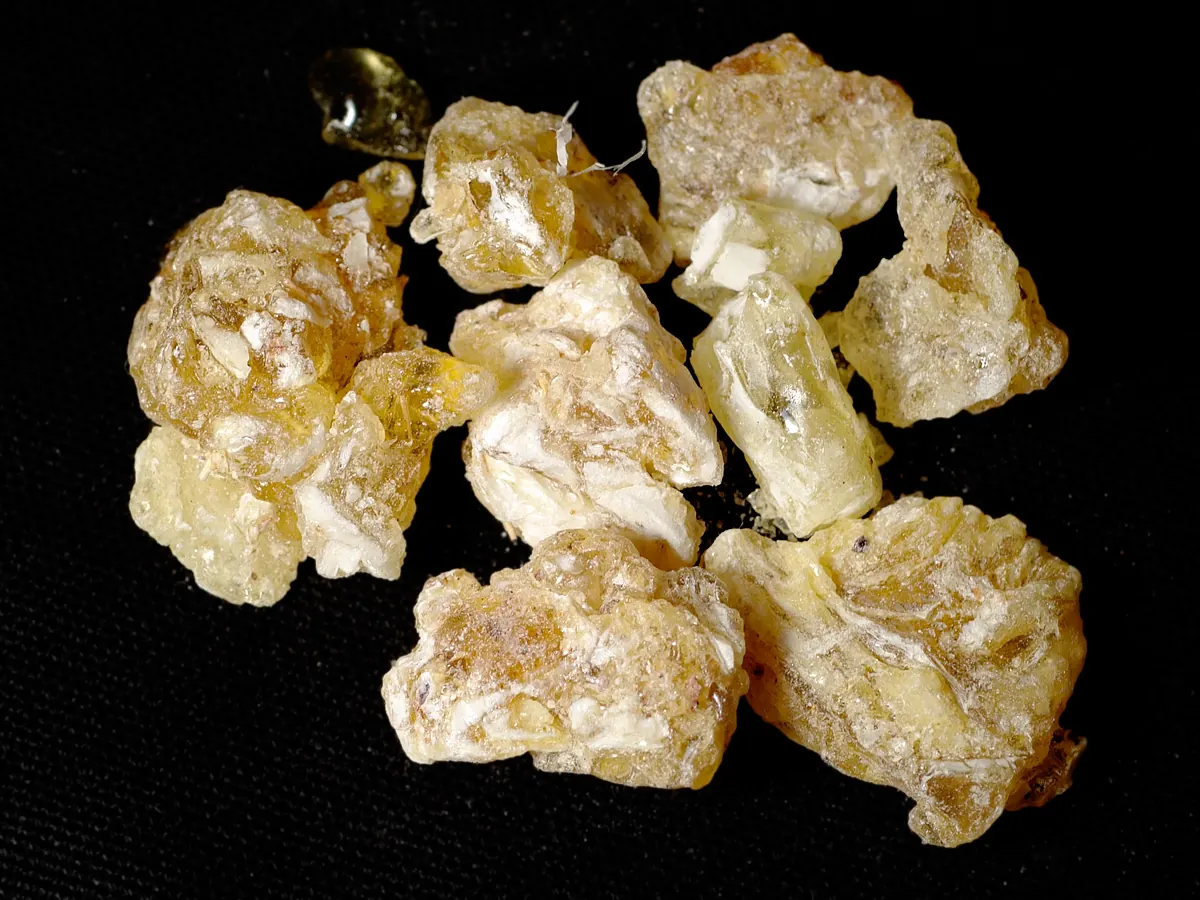
What you need to burn resin
Get everything ready before you light anything, because charcoal heats up fast:
- A heat-proof burner: use a stable metal or ceramic censer.
- A layer of sand: Apothecary's Garden suggests about an inch of sand or fine gravel, so the heat doesn't go straight into the burner.
- Tongs and a small spoon: never touch charcoal with your hands.
- A base: set the burner on a flat surface, away from curtains, fabric and paper.
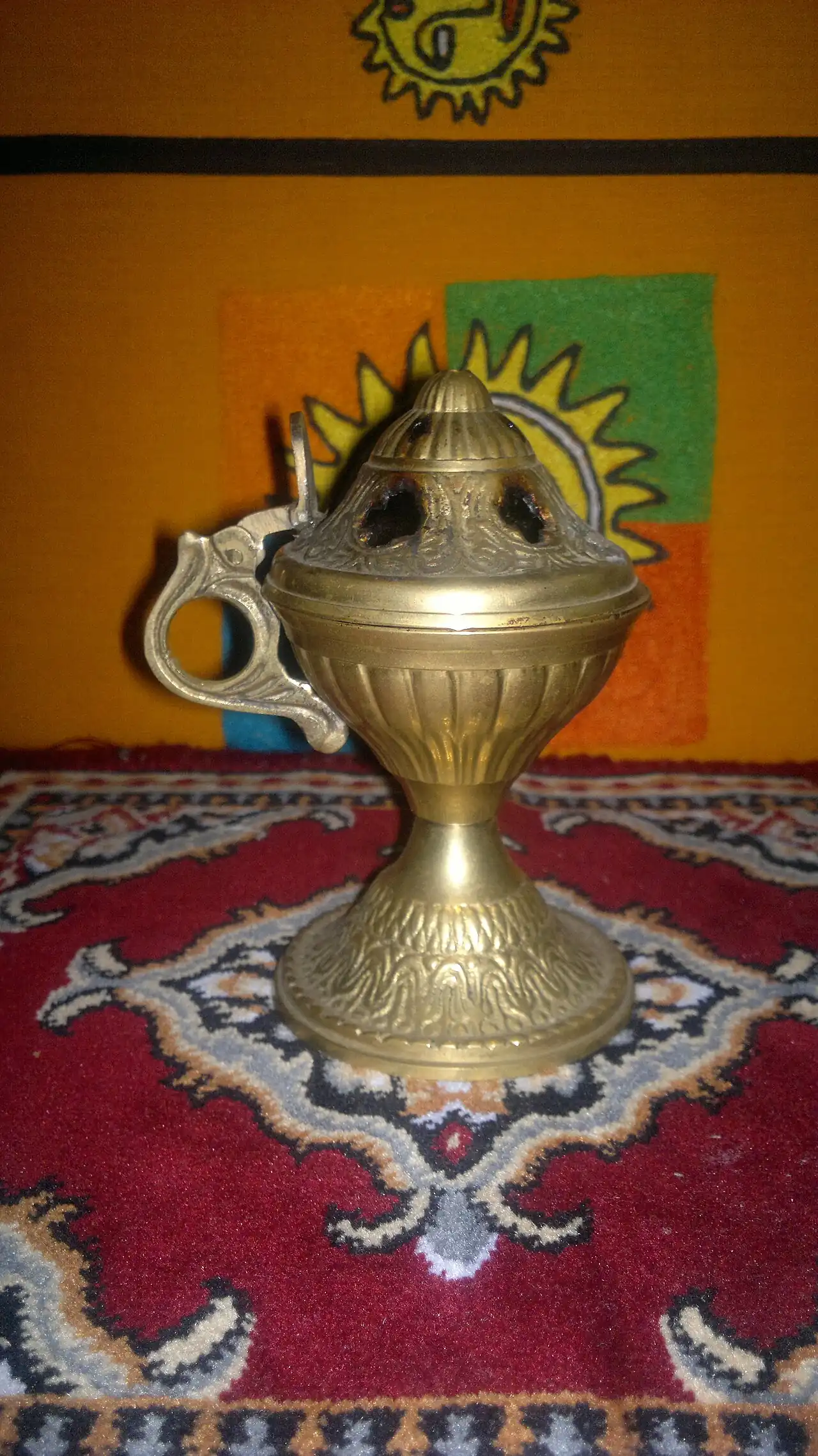
How to burn resin incense on charcoal
These steps show how to burn resin incense on a tablet, combining guidance from ChurchSupplies and Apothecary's Garden. Do this outdoors if you can:
- Hold a charcoal tablet with tongs, then bring a flame to its edge.
- Wait for the sparks to spread. ChurchSupplies says about 20 to 30 seconds.
- Set the charcoal on the sand, then wait for a thin coat of ash.
- Add a piece of resin the size of a pea or smaller.
- Add more only once the first piece has gone.
Charcoal tablets aren't the same as wood charcoal. Good News From Indonesia notes that small anglo braziers use hardwood charcoal and are often used for incense. However, we didn't find a detailed guide to burning benzoin on one. The principle stays the same: wait for a steady ember, then add only a little.
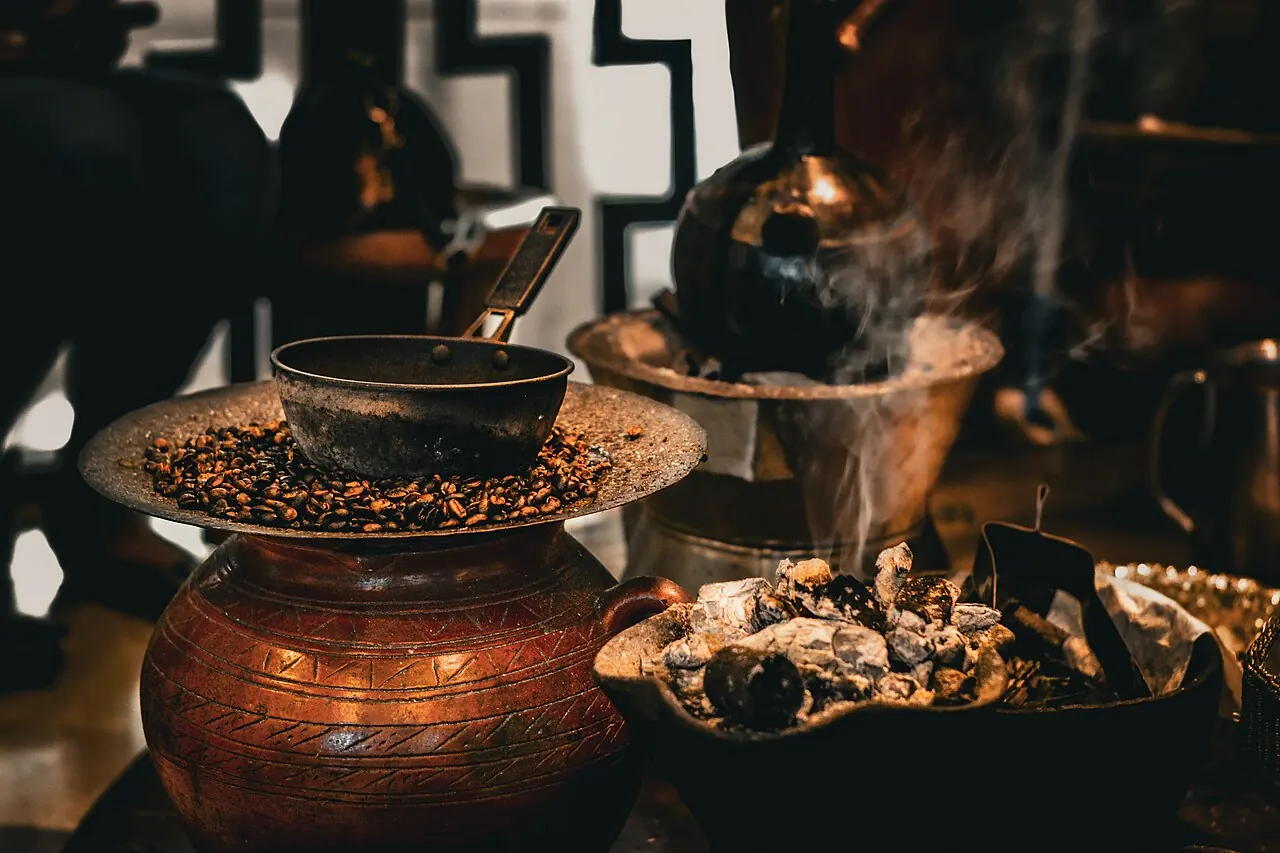
How to burn resin incense indoors: the charcoal risk
This is the most important section. Public Health Seattle & King County says never to burn charcoal inside homes, because it produces carbon monoxide. Greater Manchester Fire gives a similar warning about solid fuels.
A 2013 study also tested two kinds of United Arab Emirates incense. According to EurekAlert, both emitted significant carbon monoxide, and charcoal raised pollutant levels. However, we didn't find a measurement for one charcoal tablet in an Indonesian home, so we can't give a safe limit.
For that reason, don't burn charcoal in a bedroom or closed room, or while anyone is asleep. If headache, dizziness, weakness, nausea or confusion appear, get the person into fresh air and to an emergency room right away. Tell staff you suspect carbon monoxide poisoning.
How to burn resin incense without charcoal
These two methods avoid charcoal. However, neither has been shown to be free of problems, as the end of this section explains.
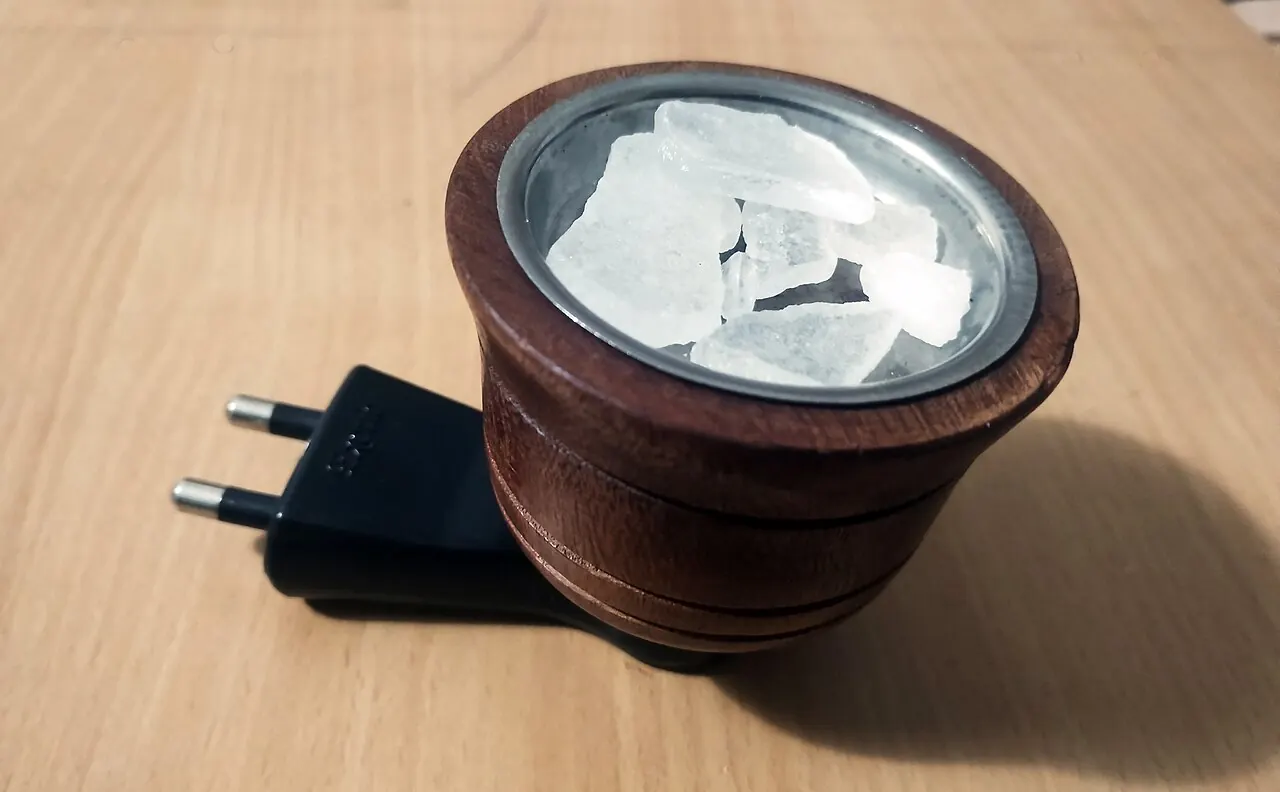
Electric heater
- Put the heater on a stable surface, then switch it on and let it warm up.
- Start at the lowest setting. Apothecary's Garden advises this when heating resin on an adjustable source.
- Put a little resin in the heater's metal dish.
- Raise the heat slowly until you notice the scent.
Foil or a metal dish can help keep the heater clean. Also follow the manual for your heater.
Candle burner
This burner uses a small candle under a metal tray. Apothecary's Garden suggests foil on the tray, and says a beeswax candle gives more heat. By contrast, anu essentials says small candles can't melt hard resins like frankincense and myrrh. We haven't tried this with Sumatran benzoin, so the result may disappoint.
Less smoke doesn't mean no risk
Sellers sometimes call electric heaters smoke-free. That's a seller's claim, and it depends on the temperature. A 2026 study by Zhou and colleagues found that charcoal alone couldn't explain the fine particles from bakhoor. It also mentions electric heaters as an alternative, but says their effects still need testing. So keep a window open, and read our explanation of incense smoke risks.
How to burn resin incense in small amounts
Knowing how to burn resin incense also means using less, because too much works against you. Apothecary's Garden warns that it can smother the charcoal.
| Problem | Possible cause | What to try |
|---|---|---|
| Charcoal goes out | Too much resin | Start with a pea-sized piece |
| Smoke is too thick | High heat or too much resin | Use less, or move outdoors |
| No scent from a candle burner | Not enough heat | Crush the resin, or try another method |
| You can smell the charcoal | The tablet has only just lit | Light it outside and wait for the ash coat |
We haven't tested this table ourselves. If you're new to this, also read the basics of lighting each form of incense.
Resin in ritual use
Seasia writes that kemenyan is tied to Kejawen rituals and Batak ceremonies. This article only covers how to burn resin incense from a technical and safety angle, not prayers or religious rulings. So ask a community elder or religious leader about the proper way. We also summarize several traditions in our guide to incense in worship.
After you burn resin
Don't throw charcoal away while it's still warm. ChurchSupplies says to wait until it's fully cold, and Greater Manchester Fire asks you to check that nothing is still smoldering. After that, clear any stuck resin once the burner has cooled, as its instructions say.
Editorial note
Dupa Incense hasn't tested the methods, amounts or results in this article, and the photos are illustrations. Most technical guidance comes from shops that sell resin equipment, and it covers frankincense or resins in general. This article isn't medical advice. Dupa Incense is run by a partner of Dupalo, an incense maker in Malang, but this article doesn't recommend a particular product.
Frequently asked questions
Can you burn resin without charcoal?
Yes, for example with an electric heater you can adjust, or a candle burner. A candle burner may not get hot enough for hard resins, so results can vary.
How much resin should I burn?
Start with a piece the size of a pea or smaller. Too much resin can smother the charcoal and add more smoke.
Can I burn resin on charcoal in a bedroom?
It's best not to. Charcoal produces carbon monoxide, and the health agency we read says never to burn it inside homes. Do it outdoors, or use an electric heater.
Is frankincense the same as Indonesian kemenyan?
No. Indonesian kemenyan comes from Styrax trees, while frankincense comes from Boswellia. Some guidance in this article covers frankincense, so start with a small amount.
Sources
- Apothecary's Garden (2023): How to burn frankincense and other aromatic resins
- ChurchSupplies (2024): How to light charcoal for church incense
- anu essentials: Electric resin burners
- This Is Darkness (2021): Alternatives to burning resins
- Zhou dkk., Atmospheric Chemistry and Physics (2026): Indoor burning of Arabian incense
- EurekAlert (2013): laporan studi asap dupa UAE di Science of the Total Environment
- Public Health Seattle & King County: Carbon monoxide facts
- Greater Manchester Fire: Ceremonial burning practices
- FAO: Description of gum benzoin
- UGM (2026): Kemenyan masih diekspor mentah
- Good News From Indonesia (2025): Mengenal anglo
- Seasia (2026): Kemenyan between global luxury and domestic mysticism